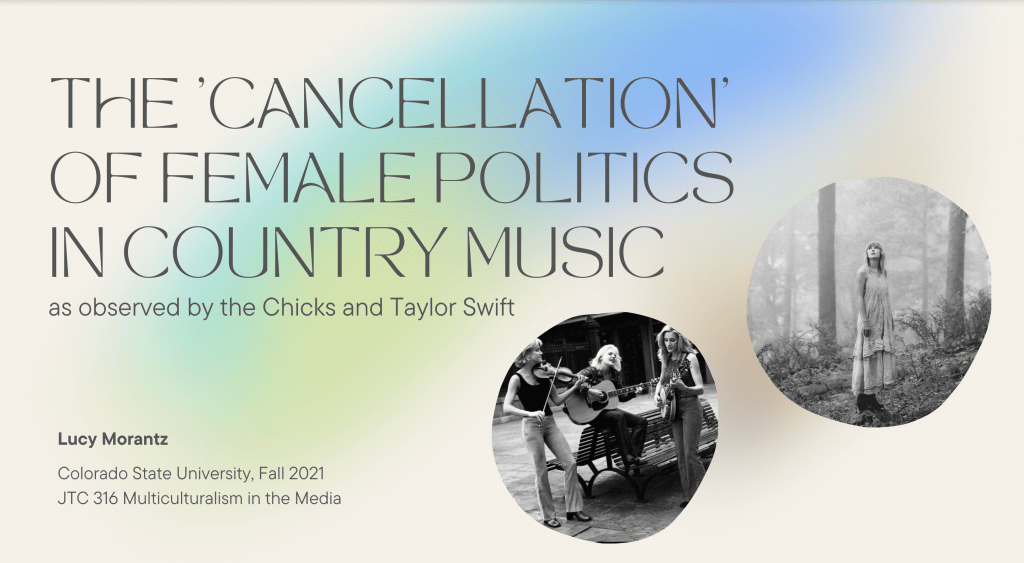
My final project for JTC 316, multiculturalism in the media, will demonstrate the importance of female-identifying country artists using their platforms to advocate and share their political views. While male-identifying artists, both within and outside of the country genre, face minimal criticisms, if any at all, for sharing their beliefs, female artists have frequently been subjected to the modern so-called ‘cancel culture’ for exercising the same rights as their male counterparts.
To explain this problematic trend, I will apply various media theories to explicitly show readers the direct role that mass media and the music industry play in this cultural habit. Aside from showing how the ‘cancellation’ of these female artists is initiated, I will analyze why it occurs in order to maintain the disproportionate power dynamics within society via the hegemonic tool of the mass media.
After the explanation of the topic and its applicable concepts, two case studies will focus on the contentious relationship between the mass media, music industry executives and female country artists like The Chicks and Taylor Swift. In the early 2000s, the once-chart-topping female country group morphed into the standard for what young female artists are told not to do following their meteoric downfall in the aftermath of on-stage comments criticizing then-President George W. Bush’s invasion of Iraq. The Chicks, then, will serve as the example used to demonstrate the rigid gender roles female musicians, and women generally, are expected to adhere to in modern American society. Seeing as The Chicks’ activism was an oppressive deterrent forced upon a young Taylor Swift as she was just breaking into the industry, Swift’s career and social activism timeline will showcase the influence mass media has in constructing a female celebrity’s public perception and thereby reinforcing society’s expected gender roles.
It will be my goal throughout to articulate why exactly this rigid and oppressive culture is not only dangerous to the interests of the music industry and future generations of artists but also is harmful in the precedent it sets for society’s women who, like myself, view these artists as role models. In ‘cancelling’ these musicians, society is sending the message to all other women that it is wrong for them to possess and advocate political views. In turn, this further alienates female perspectives from being considered in broader public discourse, consequently perpetuating our society’s adherence to western patriarchal values.
These topics and case studies are particularly important to me given their personal significance to my life as politics and social justice advocacy have always been passions of mine. Additionally, while I was a Swift fan growing up, I will regrettably admit to buying into the false and patriarchal media narrative starting in 2012 which paints her as one of pop culture’s most problematic figures. However, over the past two years, her music, life and personality have become some of my greatest inspirations. She has encouraged me and countless others to challenge status quo gender roles and to speak out when we sense injustice in the world, all while simultaneously maintaining that stereotypical aspect of femininity, such as emotional vulnerability, sociability, and glitter, do not have to be incompatible with female empowerment.
The music industry has a disturbing tendency to suppress female-identified artists when they challenge stereotypical gender norms. This form of ‘cancel culture’ — the ostracism of high-profile individuals who are removed from the public sphere in reaction to some event they were engaged in — seems to be especially pointed in instances when a female musician expresses her personal, political or social beliefs and when that artist’s musical genre falls in the country category.
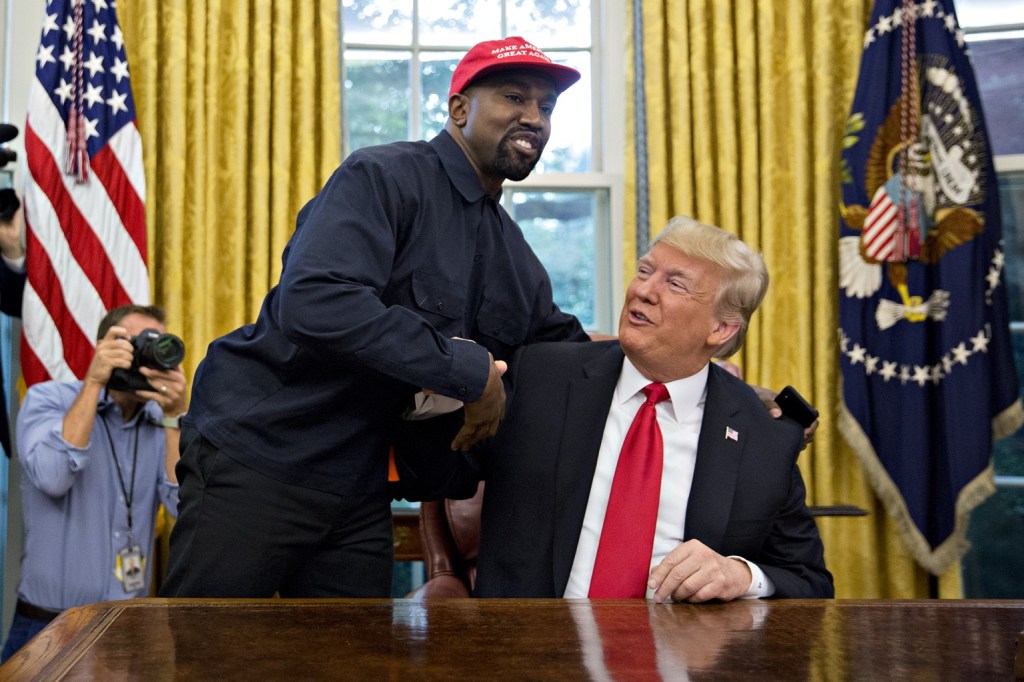
Some may justify this habit by asserting that musicians have no business in influencing socio-political discourse and that their lone responsibility is to make music that appeals to the masses. However, many male artists from John Lennon to Kanye West have not faced similar criticisms when they engage in political discourse, and if they have it was nowhere near the ‘cancellation’ extent and usually is based on ideological differences instead of the mere fact that they weighed in. While this rigid role reserved for women may be fine and well for some artists, the influence that this precedent has is harmful in that it reinforces the archetype women are expected to emulate and further minimizes the critical role that a female perspective serves in multicultural public discourse.
The goal of this project, then, is to dissect this trend and demonstrate exactly why it is so harmful to society. To accomplish this, I will use the once-dominant female-country group The Chicks (formerly known as “The Dixie Chicks” — but more on that later) and child-country-star-turned-pop-sensation Taylor Swift as case studies. At the height of their careers, all of these women challenged this gender norm and were consequently persecuted for doing so. The importance of these actions cannot be overstated as progress in any sense is achieved incrementally and trailblazers like these women are strategically setting the stage for future generations of artists to do the same.
To begin our analysis, it is important that we lay the foundation for why diverse media representation matters in a society that is so entrenched in patriarchal values that many cannot see the forest through the trees (unapologetic Taylor reference). First, let us consider how a society’s ideology is constructed. Colorado State University Department of Journalism and Media Communications Professor Dr. Tori Arthur defines ‘ideology’ as, “A system of beliefs or a set of ideas that both constitute a general worldview and uphold particular power dynamics.” Essentially, ideology is a society’s collective way of thinking about the world and the influence that thinking has on the distribution of power. What is important to note are the smaller components that accumulate to comprise a society’s ideology, better thought of as individual ideas.

How these ideas are conceived is the next topic to consider. While I personally have a hard time wrapping my head around how some can claim Fox News as an unbiased news source while simultaneously throwing outlets like The New York Times under the bus, what I can agree with is that the media we consume implicitly, and sometimes explicitly, dictates what ideas we have and, thus, society’s ideology. To prove this phenomenon there are various theories; the agenda-setting theory, the hypodermic needle theory of communication, media representation theory, uses and gratifications model, and the two-step flow model. All of these serve distinct yet critical roles in explaining why and how cancel culture manifests.
The first theory that explains mass media’s influence on public discourse in the broadest sense is the agenda-setting function. This is the idea that the priorities of society are decided by what stories the mass media considers important. The degree to which these priorities are perpetuated is then reinforced by how much coverage the supposedly important stories receive. A positive use of this power is demonstrated by the extraordinary amount of coverage various media outlets dedicated to the murder of George Floyd and how it influenced not only the subsequent protests, but the entire conversation surrounding Black Lives Matter, police brutality, and racial justice as a whole. In the context of this project, this concept will be used to explain how celebrities attain their fame and how it is maintained thereafter.
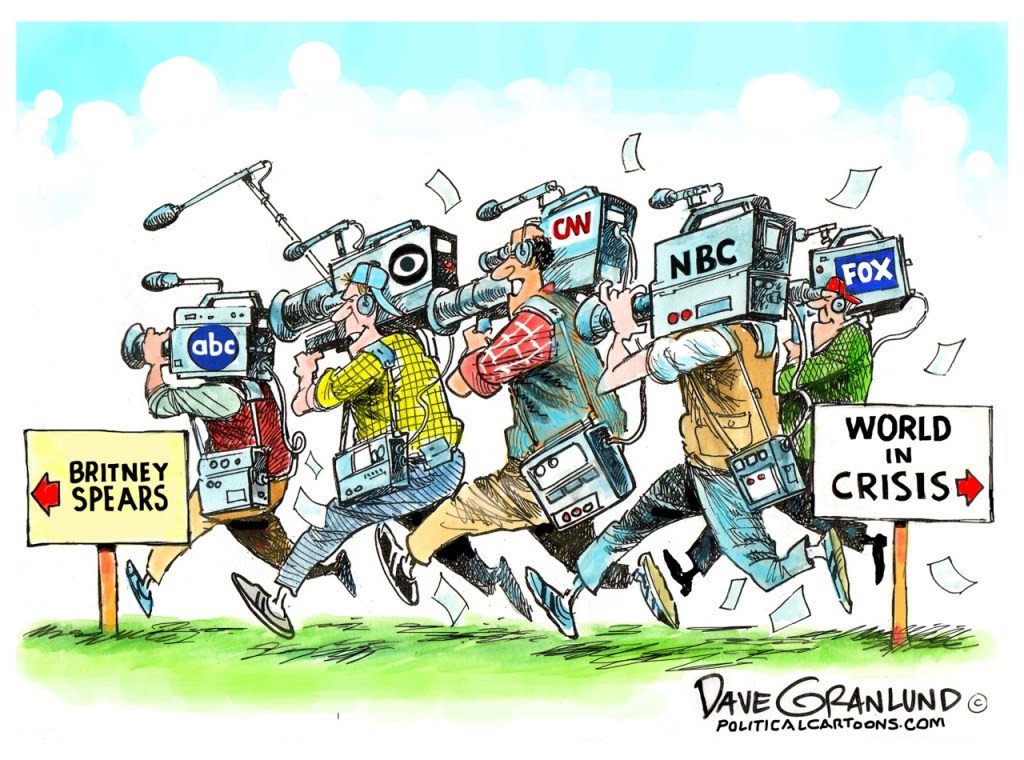
The next theory, the hypodermic needle model, takes agenda-setting a step further by asserting that through the messages and portrayals distributed, mass media directly dictates what and how people think, not just what they think about. An example of this theory being utilized to the most abusive extent is seen in how Hitler and the Nazis monopolized German media in the mid-twentieth century. By exclusively dispensing propagandic images and messages while forgoing any criticisms of the hyper-oppressive regime, the ideology of German society was completely transformed to one that explicitly reflected the ideas they were forced to consume.
In light of the modern conversation surrounding media messages and their subsequent influence, people have increasingly become more attuned to deciphering messages and consciously rejecting them when they sense shortcomings or biases. Because of this, the hypodermic needle theory has been discredited by many academics as they feel the theory is outdated.
Where this theory falls short, though, the media representation theory steps in. Think about it this way: to form an idea, one first needs to be exposed to the relevant information. If that information only projects the ideas of those who constructed it, then those ideas will frame the way the public interprets people, places, events and ‘reality’ as a whole which then constructs ideology. In the context of this project, this theory will be used to explain how an artist’s identity in the eyes of the public manifests.

The fourth framework, the uses and gratifications model, is likely the most beneficial to aid in the explanation of how ideas and ideologies are reinforced after they are created. As it applies to The Chicks and Taylor Swift, it explains why many country fans — who are typically associated with particular world views — are so unwelcoming to women who express conflicting opinions. The best way to sum up this theory is through the term ‘confirmation bias.’ Essentially, audiences actively seek out information that is aligned with their personal beliefs and what they get gratification from. This combined with the corporatization of news outlets shows why headlines are often hyperbolized and biases are applied to stories, as they are all competing for the audience’s attention and money. This theory does, however, grant audiences some leeway by holding that they still play an active role in deciphering the messages. Think of it as “what people do with media” as opposed to “what media does to people.”
Finally, to explain why artists of any gender hold the influence that they do is the two-step flow model. The first step here is for mass media to reach influential individuals or so-called “opinion leaders” such as politicians and celebrities. From there, the opinion leaders interpret the original information on their own and then distribute their interpretation along with the first-hand account, to varying degrees. While this does explain celebrities’ political and social influence in the broadest sense, here it will be used specifically to explain why advocacy by female artists is simultaneously seen as a threat by some and necessary to others.
Since we now have a basis for how mass media influences the thinking of both society and individuals, we must consider the roles these quasi-artificial ideologies play in upholding stereotypical gender norms and disproportionate power dynamics in the music industry and society more generally.

The following article will explain more vividly just how pervasive sexism is in the music industry. However, for the sake of this article, let us assume, just for now, that the music industry does in fact operate under hyper-patriarchal conditions in terms of both the work distributed and the people who control the industry. Doing so will allow for a better analysis of how the treatment of female country artists by the media, and consequently by society, uphold hegemonic hierarchies.
First, what are hegemonic hierarchies? Well, they are the rules, institutions, values, explanations, and more used by the ruling class to create and uphold their desired cultural status quo. In the context of the modern world and music industry, this ‘ruling class’ can be thought of as mass media and record label executives. To achieve this universal line of thinking, the ruling class can utilize one of two methods; the repressive state apparatus (RSA) or the ideological state apparatus (ISA). RSAs refer to state institutions such as the police, military, courts, and legislation that are used to oppress society, so they will be of nominal interest to this topic. On the other hand, ISAs are the social institutions that perpetuate the ideas and ideology asserted by the ruling class. Examples of these could be families, education systems and mass media.

Ideology, then, is the tool used in the process of creating and upholding hegemonic hierarchies. To better understand how the two are used in relation to one another, consider the following example: The ideology is that Black and Latinx individuals and communities are inherently poor and violent. In light of how hasty a generalization this is given that poverty and violence can be found within any racial or ethnic category, the pervasiveness and relative acceptance of such an absurd stereotype are undoubtedly reinforced by hegemony. Particularly, when the media covers stories of urban Black or Latinx individuals who have “pulled themselves up by the bootstraps” to escape poverty, they are choosing an isolated case to celebrate and contrast it from what is considered the status quo, thereby making the stereotype even more ubiquitous. This can be demonstrated even further by the relative lack of these stories in lower-class white communities where the stereotype is not applied.
As this concept applies to this project, consider the stereotypical gender roles women are expected to obey within the American public sphere. All 166.7 million of us are expected to conform to the ideology that contains us to a polite, obedient, non-disruptive, overly-accommodating, submissive and, most of all, apolitical existence. Through hegemony, the music industry has perpetuated this ideology by rewarding female country artists like Carrie Underwood who has obeyed these norms by never revealing their political allegiances, while ‘canceling’ female artists who overtly disobey the archetype — namely The Chicks and Taylor Swift.
Given the unprecedented and ever-growing wealth gap within the United States, it is highly unlikely that American society will be able to change these disproportionate power dynamics through a mere overtaking of the ISAs. However, it should be recognized that society does have the power to change the status quo through the collective exploitation and denial of ideological contradictions forced upon them by the mass media ruling class.
One such way to exploit and communicate these contradictions to the masses is, ironically, through the media itself. The Chicks and Taylor Swift understood this perfectly.


Singer, songwriter, producer and musical entrepreneur Shawn Amos put it best; “Depending on your political orientation, The Dixie Chicks are either the great defenders of free speech or American traitors.”
So, what exactly did The Chicks do to be deserving of what is one of the earliest examples of ‘cancel culture’? Well, to start at the beginning, band members Natalie Maines, Emily Strayer-Robison and Martie Maguire created the country-bluegrass band in 1989 out of Dallas under the name “The Dixie Chicks” (more on that later). The all-female group went six years until signing with the newly revived, but still male-dominated, country record label, Monument Records. Under this label the group became more musically sophisticated and much more instrument-based, releasing Wide Open Spaces in 1998. Their debut album sold more than 12 million copies in the U.S. and was named best country album at the 1999 Grammy Awards.

In case there is any confusion, let us first demonstrate that the music industry did, and still does, operate under hyper-patriarchal conditions. To do this, I will draw on Marc Lafrance, Lara Worcester and Lori Burns’ study, “Gender and the Billboard Top 40 Charts between 1997 and 2007.” In this study, it is explained how “‘Even in women’s best years, 1996 to 1999, the men’s totals were considerably higher, and the number of hits was about double the women’s.’” Then, they found that although solo female artists trailed solo male artists by only six hits, male groups more than doubled that of female groups. On the other hand, when the data is derived from airplay charts, which reflect the frequency a song is played on radio stations, the gender discrepancies are even greater. This distinction between sales charts and airplay charts is important as it more definitively shows that even though individual consumers appeared more open to embracing female artists, whether it be groups or individuals, radio stations, serving as a critical form of mass media in the absence of digital streaming services, were overwhelmingly less inclined to do so. This observance shows that The Chicks do not serve as the norm for this time but rather an isolated instance of female success in the industry.
After continuing on their track to stardom at a pace that established them as the most successful female musical group of all time, it seemed as though these women could do no wrong — until they did.
In 2003, American political tensions were running high in the lead-up to the military invasion of Iraq ordered by former Republican President George W. Bush. Nine days before the invasion, The Chicks were on tour when Maines told a London crowd, “Just so you know, we’re on the good side with y’all. We do not want this war, this violence, and we’re ashamed that the President of the United States is from Texas.” Chaos ensued immediately.
The all-female group quickly faced some of the harshest backlash of any music group in history. From the media, Fox News’ very own Bill O’Reilly called them “callow, foolish women who deserve to be slapped around,” while other media personalities coined them “The Ditzy Twits” and “the dumbest, dumbest bimbos — with due respect — I have seen.” Country radio stations cut their music from all playlists. Fans abandoned the once-beloved group calling them anti-American traitors and swapping listening parties for album-burning parties.
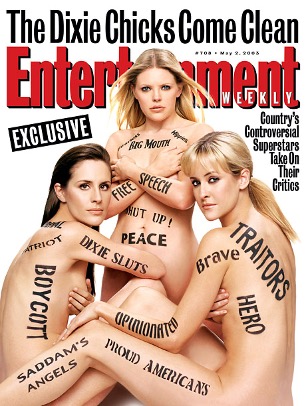
What was the group’s response? The now-infamous May 2003 cover of Entertainment Weekly, given the ideology associated with the majority of country music fans, only made matters worse. The Chicks were officially canceled.
*Enter Taylor Swift*
Signing her first record deal in 2004 at just 14 years old, Swift entered an industry where the previous decade’s patriarchal tendencies were both perpetuated and exacerbated. Aside from her label’s notoriously misogynistic executives, namely Scott Borchetta and Scooter Braun, female Top 40 hits between 2004 and 2005 dramatically decreased while the same statistic for male artists increased.
Considering the public’s perception of the lead female country artist of the time, Carrie Underwood, Swift was advised from the onset of her career to not be like The Chicks who she looked up to as a kid. As she satirically explains in her Netflix Documentary “Miss Americana,” “A nice girl doesn’t force their opinions on people. A nice girl smiles and waves and says thank you. A nice girl doesn’t make people feel uncomfortable with her views.” This carefully curated ‘girl-next-door’ persona won over the public, mass media and white supremacist groups who dubbed her as their queen — an adoption she was not allowed to condemn until 2018 when she was released from her contract.
Following her debut (2006) and sophomore (2008) albums’ extraordinary popular and critical success, came the 2009 MTV Video Music Awards where Swift was honored for the best video by a female artist. While giving her acceptance speech as one of the youngest artists to ever receive this award (she was only 19 years old), Kanye West, a 32-year-old male rapper, ran on stage, took the microphone out of her hands, and announced on live national television that she did not deserve the award (have a male artist’s award qualifications ever been questioned so publicly?). After this, politics ironically found her when former Democratic President Barack Obama weighed in on the incident, calling West a “jack-ass” during a break in an interview.

As Swift’s unprecedented success continued, mass media became her new enemy. On Fox News’s Red Eye, a host suggested that she takes herself far too seriously and another said, “I think that there are plenty of annoying women. I think that Taylor Swift, she is annoying.” Other media personalities criticized her saying, “She’s too good. She’s too skinny. It bothers me. All her model friends, and it’s just like, come on.”
Swift’s most pervasive criticism, though, is one reserved only for female stars and has nothing to do with her music or politics; “She goes through guys like a train.” While many male artists like Mick Jagger and West are hailed by mass media and the public for their ‘game,’ they are never held to the same impossible standards as female artists.
Even though only two examples of this double standard are nowhere near adequate to do it justice as it relates to Swift’s career, consider this dialogue from an Entertainment Tonight red carpet interview at the 2015 Grammy Awards: “I just wanted to show the legs because as I was telling you earlier ahead of time you’re going to walk home with more than maybe just a trophy tonight. I think lots of men.” — “I’m not going to walk home with any men tonight.” Swift promptly left this interview and went on to take home three Grammys and zero men that night.
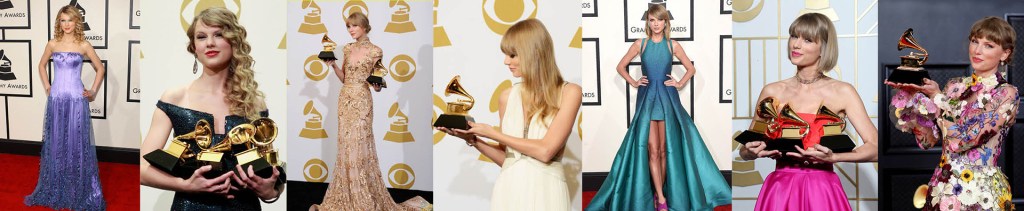
Whether it was calling out other female celebrities who aided in her hyper-public slut-shaming by saying, “There’s a special place in hell for women who don’t help other women,” or counter-suing a Denver radio host for one dollar after he sexually assaulted her at a 2013 meet and greet and filed a defamation suit against her for millions, Swift has increasingly become more comfortable with herself and her politics over the past few years.
However, that is not to say her road to getting there was easy by any means. Recall the 2016 feud between her, Kanye West, and Kim Kardashian and her consequential cancellation and self-imposed year of isolation. This marks the end of a submissive Swift and the beginning of her finally coming into her own as the most successful female artist of all time.
After deleting any and all content from each of her social media platforms and a year-long hiatus from public life in 2016, she returned to surprise fans with the first single and music video for Reputation (2017). The single, “Look What You Made Me Do” was cryptically announced via three separate Instagram posts, which gave the public their first glimpse into Swift’s new era — one characterized by an ‘IDGAF’ approach to life and the industry.

From this, we get our first insights into where Swift’s true political allegiances lie, void of the mass media assumptions that she was a ‘closeted conservative’ all along. In the midst of the lead-up to the 2018 midterm elections, a U.S. Senate race in Swift’s home state of Tennessee was the final straw. Swift approached her team about voicing her views, explaining that she wished she would have in 2016 and that, “It’s really basic human rights, and it’s right and wrong at this point…I need to do this. I just need you to forgive me for doing it, ‘cause I’m doing it.” Again, male music executives tried to muzzle Swift’s politics. But this time, she would not stand for it.
In the “Miss Americana” documentary, we saw behind the scenes what happened leading up to her first-ever political post. The movie shows her female publicist encouragingly talking her through it and brings up the possibility that former Republican President Donald Trump could come for her. To this scenario, Swift responds: “Yeah f-ck that, I don’t care. If I get bad press for saying, ‘Don’t put a homophobic racist in office,’ then I get bad press for that…I think it is so frilly and spineless of me to stand on stage and go, ‘Happy Pride Month, you guys!’ And then not say this when someone is literally coming for their neck.” With the exchange of a “Cheers to the resistance” and one last sip of wine, the post was sent to Swift’s 112 million Instagram followers.
With this, white supremacist groups’ obsession with Swift ceased, her music fell 25% in quality in the eyes of Donald Trump, and 51,308 new voters registered in 24 hours — more than the entire month of August. Swift didn’t stop here. Since 2018, she has publicly supported issues from racial justice to abortion rights, written various politically-charged songs, was named an LGBTQ ally by GLAAD, the world’s most prominent LGBTQ+ advocacy group, and so much more.
While the whole world was watching the Black Lives Matter protests in the summer of 2020, The Chicks ended their 17-year hiatus with the release of the single and accompanying music video for “March March.” The influence of the political climate was obviously not lost on the women, as the video and lyrics featured scenes from protests all over the world for issues like the environment, feminism, racism, and LGBTQ+ pride. Further, the drop of “Dixie,” a term used to refer to the Civil War-era south, was a way to distance themselves even further from the ideology of their previous fan base.
The Chicks masterfully utilized their newfound medium of social media to speak directly to their audience, avoiding the manipulation by the mass media they were all too familiar with. When “March March” was announced on Instagram on June 25, 2020, the caption used alongside the extraordinarily moving visual protest scenes was contained to a single quote; “If your voice held no power, they wouldn’t try to silence you.” Obviously, this was in reference to the ever-important racial justice protests of the time, however, its application to the group’s own relationship with the media is striking.
I hope it is now clear how Swift’s political evolution would not have been possible if not for the bold actions of The Chicks in 2003. Further, I hope it is obvious the ways that these artists have started to normalize female politics in the public sphere, setting the stage for future generations of musicians to do the same. This influence is not hypothetical either, as young female artists like Gracie Abrams and Olivia Rodrigo carry on this legacy, signaling to women everywhere that a ‘nice girl’ can have political views.
references
“42nd Annual Grammy Awards.” GRAMMY.com, 10 Sept. 2019, https://www.grammy.com/grammys/awards/42nd-annual-grammy-awards-1999.
Board, The Editorial. “Gen. Milley Talks to China: Political Cartoons.” Press Enterprise, Press Enterprise, 27 Sept. 2021, https://www.pe.com/2021/09/27/gen-milley-talks-to-china-political-cartoons/.
Britannica, The Editors of Encyclopaedia. “the Chicks”. Encyclopedia Britannica, 26 Jun. 2020, https://www.britannica.com/topic/Dixie-Chicks. Accessed 16 December 2021.
Chang, Bee-Shyuan. “For Taylor Swift’s Image, Erosion Is a Danger.” For Taylor Swift’s Image, Erosion Is a Danger – NYTimes.com, 19 Mar. 2013, https://web.archive.org/web/20130322144321/http://www.nytimes.com/2013/03/17/fashion/for-taylor-swifts-image-erosion-is-a-danger.html?pagewanted=2.
“The Dixie Chicks Backlash Begins.” History.com, A&E Television Networks, 13 Nov. 2009, https://www.history.com/this-day-in-history/the-dixie-chicks-backlash-begins.
Gonzalez, Sandra, et al. “Jury Rules in Favor of Taylor Swift in Groping Case.” CNN, Cable News Network, 15 Aug. 2017, https://www.cnn.com/2017/08/14/entertainment/taylor-swift-verdict/index.html.
Hudak, Joseph. “Twang’s up? Samantha Bee Explores Sexism in Country Music.” Rolling Stone, Rolling Stone, 16 Jan. 2020, https://www.rollingstone.com/music/music-country/samantha-bee-country-music-sexism-nashville-938619/.
“Ideological Hegemony: How Our Own Thoughts Became the Greatest Weapon of the Ruling Class.” Films For Action, https://www.filmsforaction.org/articles/people-dont-vote-because-they-have-internalized-the-ideology-of-their-oppressors/.
“Infographic: Women in Music.” Pittsburgh Lesbian Correspondents, 16 Aug. 2013, https://www.pghlesbian.com/2013/08/infographic-women-in-music/.
Kelly, Aoife. “Watch: Taylor Swift Gives Entertainment Tonight’s Nancy O’Dell the Death Stare.” Independent, Independent.ie, 11 Feb. 2015, https://www.independent.ie/entertainment/television/tv-news/watch-taylor-swift-gives-entertainment-tonights-nancy-odell-the-death-stare-30983498.html.
Marc Lafrance , Lara Worcester & Lori Burns (2011) Gender and the Billboard Top 40 Charts between 1997 and 2007, Popular Music and Society, 34:5, 557-570, DOI: 10.1080/03007766.2010.522827
Miss Americana: Taylor Swift. Directed by Lana Wilson, Netflix, 2020.
Montz, Rob. “Kanye-Trump Bromance Shows How GOP Should Keep Courting Black Voters.” New York Post, New York Post, 24 Dec. 2020, https://nypost.com/article/kanye-west-donald-trump-bromance-gop-black-voters/.
“Obama Calls Kanye a ‘Jack-Ass’.” POLITICO, 12 Apr. 2012, https://www.politico.com/video/2012/04/obama-calls-kanye-a-jack-ass-012679.
Saad, Lydia. “Americans’ Political Ideology Held Steady in 2020.” Gallup.com, Gallup, 20 Nov. 2021, https://news.gallup.com/poll/328367/americans-political-ideology-held-steady-2020.asp.
Savage, Mark. “Taylor Swift and Kanye West’s Phone Call Leaks.” BBC News, BBC, 23 Mar. 2020, https://www.bbc.com/news/entertainment-arts-52003974.
“Shawn Amos Quotes.” BrainyQuote, Xplore, https://www.brainyquote.com/quotes/shawn_amos_692655.
Siede, Caroline. “Political Cartoon Skewers Biased Media Coverage.” Boing Boing, 29 Apr. 2015, https://boingboing.net/2015/04/29/political-cartoon-skewers-bias.html.
Swift, Taylor. (taylorswift). “I’m writing this post about” Instagram, 7 October 2018, https://www.instagram.com/p/BopoXpYnCes/?hl=en.
thechicks. (thechicks). “#MARCHMARCH” Instagram, 25 June 2020, https://www.instagram.com/p/CB3TmcGnZP_/.
 Lucy Morantz Media